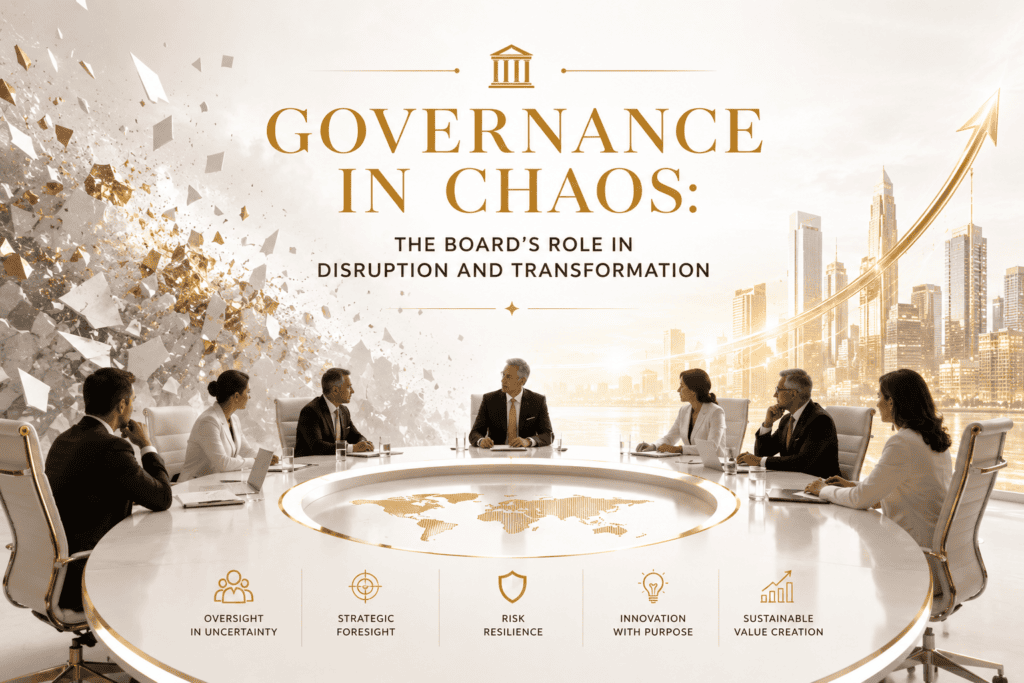

How Boards Move from Oversight to Value Creation
Prepared by Hafsa Research and Analysis Company
The Core Shift: Boards as Architects of Resilience
Boards were once guardians of stability. Today, they must be architects of resilience. In an era marked by AI disruption, geopolitical fragmentation, and climate risk, the difference between collapse and comeback often lies in the boardroom.
BCG’s 2026 research delivers a stark finding: transformations are among the most high-stakes undertakings in corporate life, yet nearly two-thirds of chief transformation officers say board involvement is limited to reviewing status updates. Only 26% report their board is highly engaged—and just 14% find board contributions “very useful”.
This is a missed opportunity of enormous proportions. Many directors are seasoned executives with decades of transformation experience. When boards shift from passive oversight to active partnership, success rates more than double.
Solution 1: Calibrate Board Engagement to Transformation Type
Not every transformation demands the same level of board involvement. BCG’s research identifies a spectrum:
CEO-led growth transformations may only require quarterly updates. The CEO is the core stakeholder, and the CTO reports primarily to the CEO.
Board-initiated turnarounds warrant far more engagement. When a health care company faced financial distress, the board kicked off the transformation, set strategic milestones, and stayed heavily involved through execution—including portfolio reshaping and investment strategy. The board received monthly updates on key financial metrics. The outcome: the company hit targets on schedule and became one of its industry’s top-performing stocks that year.
Action step: Assess your transformation’s origin and complexity. If the board initiated it—or if the company faces existential risk—move beyond quarterly updates. Create a smaller working group of directors with relevant experience and give them direct access to the transformation leader.
Solution 2: Build Digital and Domain Fluency on the Board
Boeing’s governance failures offer a painful lesson. Post-737 MAX crisis, investigations revealed that the board lacked technical oversight and risk governance expertise. A shareholder lawsuit found that before the first crash, directors “utterly failed to establish a system for monitoring and overseeing airplane safety,” and before the second crash, consciously disregarded their duty to investigate red flags.
The remediation was structural. Boeing created an independent Aerospace Safety Committee, committed that at least three directors have aviation, engineering, or product-safety expertise, and made safety a standing item at every board meeting.
Action step: Audit your board’s expertise against your company’s mission-critical risks. If you operate in a safety-critical, technology-intensive, or regulated industry, recruit directors with domain fluency—not just general management experience.
Solution 3: Govern Culture and Risk, Not Just Numbers
Credit Suisse’s collapse was years in the making. The Swiss Parliamentary Investigation Committee found that responsibility “lies with its Board of Directors and Executive Board, who had defied numerous interventions by FINMA in the preceding years”. FINMA’s own report documented “serious deficiencies in risk management” across “almost all” of the bank’s problems, and noted that variable remuneration remained high even in loss-making years.
The lesson is direct: risk blindness is fatal. A board that monitors only financial metrics—not culture, risk, and conduct—is flying blind.
Action step: Add one ethics-led KPI to your monthly board pack (whistleblower trends, customer complaint resolution, regulatory findings). Track whether incentive structures reward short-term metrics that can be gamed.
Solution 4: Address Founder Power Before It Becomes a Governance Failure
WeWork’s pre-IPO collapse remains the definitive case study in board oversight failure. The case describes “lapses in governance oversight and fiscal discipline, CEO Neumann’s erratic behavior, and perhaps even fraud”. The board allowed unchecked founder behavior until the company stood on the brink.
The lesson: strong oversight > charismatic leadership. Boards that defer to visionary founders without independent challenge abdicate their core responsibility.
Action step: For founder-led or family-controlled enterprises, ensure independent directors have genuine authority—not merely advisory roles. The board chair should be independent, and related-party transactions should require independent committee approval.
Solution 5: Align Purpose with Profitability
Unilever’s ESG transformation offers a nuanced lesson. The company pursued a bold sustainability pivot, but investor misalignment caused friction. The current $65 billion spin-off of its food unit to McCormick has triggered investor demands for “assurances about the intention of the combined company to uphold and build upon best practice with regard to deforestation-free sourcing”.
Storebrand and Union Investment—top shareholders in both companies—are seeking transparency on how McCormick will integrate Unilever’s sustainability standards. The concern is structural: US-based McCormick faces less stringent disclosure requirements than UK-based Unilever.
Action step: When pursuing ESG transformation, align with your investor base. If your largest shareholders prioritize sustainability, embed it in transaction terms and post-merger governance. If they prioritize cost and speed, calibrate accordingly. Purpose without profitability is unsustainable—and profitability without purpose is increasingly risky.
Executive Checklist: Board Effectiveness in Disruption
Engagement Model:
- □ Calibrate board involvement to transformation type
- □ Create transformation working group with direct CTO access
Capability:
- □ Audit board expertise against mission-critical risks
- □ Recruit directors with domain fluency in technology, safety, or regulation
Governance:
- □ Add ethics-led KPI to monthly board packs
- □ Ensure independent directors have genuine authority in founder-led/family enterprises
Alignment:
- □ Align transformation strategy with investor priorities
- □ Embed governance standards in M&A and spin-off transactions
Closing Thought
Governance in chaos is about balance—between control and agility, tradition and transformation. The BCG data is unambiguous: boards that engage actively, challenge constructively, and measure outcomes financially are the difference between good intentions and great results.
The question is not whether your board oversees transformation. It is whether your board owns the outcome.
Prepared by Hafsa Research and Analysis Company